
Executive summary
Salesforce’s 2024–2025 strategy revolves around industry-specific clouds, trusted artificial intelligence and a unified data platform.
Quarterly results show Data Cloud and AI annual recurring revenue growing 120% year-over-year toUS$900millionwith more than50trillion recordsunder management. In February2025 the company reported$10billionin quarterly revenue and$37.9billionin FY25 revenue, up8%and9%respectively. These gains are fuelled by three product releases per year and new offerings such as Life Sciences Cloud, Partner Connect and Agentforce, an AI agent platform that automates quoting and service processes. Importantly, Salesforce remains the#1 CRMprovider according to IDC and commands a leading position in theUS$129billionCRM market expected by 2028.
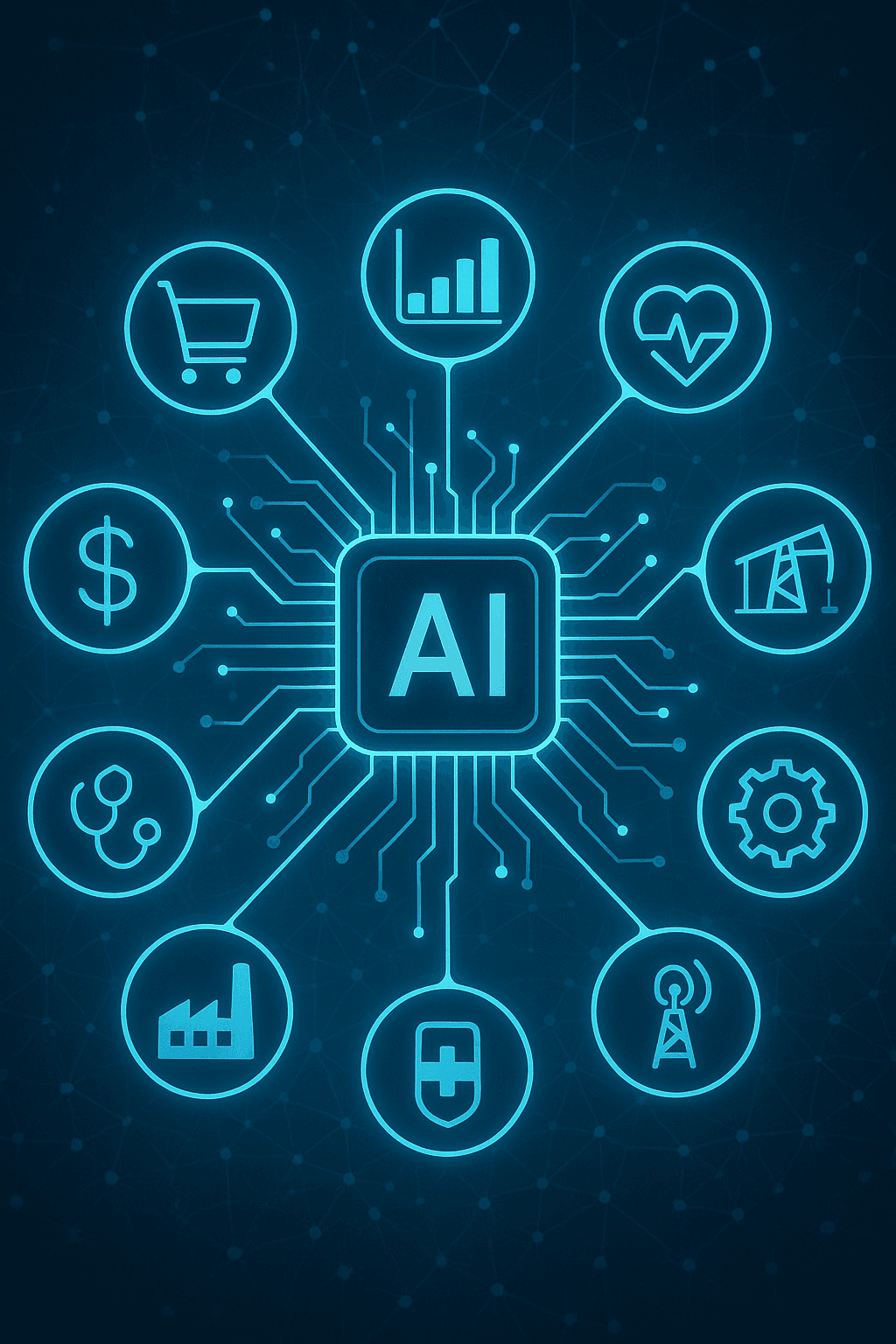
Across industries, organisations are moving from siloed, legacy systems to unified customer data platforms and AI-powered workflows. Financial institutions such as RBC Wealth Management and regional credit unions are accelerating client onboarding from weeks to minutes and increasing lead volume by 45%. Manufacturers like Numatic, Ford and Pirelli are using Sales Cloud, Manufacturing Cloud and Einstein AI to improve lead handling fivefold, boost campaign click-through rates by 48% and cut call-handling times 12%. In healthcare and life sciences, Salesforce Health Cloud and the new LifeSciencesCloud improve data accuracy, patient matching and clinical trial management, helping medtech and pharmaceutical companies bring therapies to market faster. Telecom providers see 75% improvements in database management and 45% gains in customer interaction after unifying data with Salesforce. These examples illustrate a broader trend: enterprises across sectors are leveraging Salesforce’s trusted AI and Data Cloud to solve industry-specific challenges, deliver personalised experiences and unlock new revenue streams.
Industry deep dives
Financial services (banking, wealth management & fintech)
Financial institutions face regulatory complexity, legacy IT systems and rising customer expectations. Salesforce’sFinancialServicesCloud (FSC)and MuleSoft integration tools help banks, wealth managers and fintech firms streamline onboarding, comply with regulations and personalise services.
In the credit union sector,Tntraimplemented FSC for a Southern US credit union struggling with fragmented data and manual workflows. By centralising member data, automating lead scoring and personalising outreach, the credit union increased leads by45%, improved conversion rates and enhanced operational efficiency. The case study notes that financial services firms adopting Salesforce typically see a26% increase in customer satisfaction, highlighting the market impact of FSC.
Fintech lenders also benefit from Salesforce. Cyntexa’s fintech case (2020) showed a40% surge in lead conversionafter integrating Salesforce data across loan origination platforms. Such examples underscore how unified customer data and AI-driven insights help financial institutions attract new clients, meet know-your-customer (KYC) requirements and respond to regulatory changes. Looking forward, Salesforce’s upcomingPartnerConnectwill allow banks and fintech partners to share deal data across disparate CRMs in real time. As 75% of global commerce flows through indirect channels, this capability could significantly expand co-selling opportunities in the financial ecosystem.
Manufacturing
Industrial firms grapple with complex product portfolios, fluctuating demand and distributed dealer networks. Salesforce’s ManufacturingCloud, SalesCloud and Einstein AI provide unified forecasting and collaboration tools that improve lead management, campaign performance and service efficiency.
A review of manufacturing use cases compiled by Itransition highlights quantifiable gains. The Iberian branch ofNumatic, a British cleaning equipment manufacturer, integrated SalesCloud and Einstein lead scoring to prioritise sales opportunities and deliver better forecasting. Lead handling efficiency improvedfivefold, enabling the sales team to focus on high-value prospects.Fordleveraged Salesforce to unify customer data and create dynamic dashboards, resulting in a48% increase in email click-through ratesand more responsive marketing campaigns. An American home appliance manufacturer reduced call-handling times by12%and improved field service productivity through ServiceCloud and VisualRemoteAssistant. Italian tire makerPirelliused ManufacturingCloud and B2B Commerce to build a self-service ordering portal and demand forecasting system, achieving an8% increase in B2B engagements.
These results stem from ManufacturingCloud features such asSalesAgreements(centralising long-term contracts),Advanced Account Forecasting(integrating sales, operations and finance data), andProgram-based Business management(supporting complex OEM programmes). By harmonising data across ERP, CRM and dealer portals, manufacturers gain a single source of truth, improve supply-demand alignment and deliver personalised service. The ROI demonstrates that investing in digital platforms yields tangible benefits: reduced inefficiencies, higher conversion rates and improved customer satisfaction.
Healthcare & medical devices
The healthcare sector must balance patient engagement, data security and regulatory compliance. SalesforceHealthCloudandServiceCloudhelp providers and medtech manufacturers consolidate medical records, coordinate care and meet privacy requirements.
A global medical-technology company with more than 20,000 employees replaced paper-based processes for tracking implants and patient data with aQuality Management Systembuilt on HealthCloud. Prior to the project, inaccurate or missing implant information compromised quality control and created resource-intensive data entry. Smartbridge implemented Salesforce Shield for encryption, a data intake portal and validation workflows integrated with SalesCloud, Boomi and SAP. The solution increased data accuracy, allowed teams to flag records for review and streamlined reporting. Enhanced security and privacy protections helped the medtech firm comply with stringent regulations.
For healthcare providers, Salesforce enables unified patient records and multi-channel engagement. Cyntexa’s communication cloud case reveals that integrating disparate systems into Salesforce improved database management by75%and customer management by65%, while increasing reach and customer interaction by45%. Such improvements translate to better appointment scheduling, proactive outreach to inactive patients and more personalised care experiences. With telehealth adoption rising, HealthCloud’s ability to integrate electronic health records (EHRs), schedule virtual visits and secure patient data positions it as a key platform for future digital health ecosystems.
Life sciences
Drug development is notoriously expensive and time-consuming. A day’s delay in a clinical trial can cost approximatelyUS$40,000, while postponing a launch can costover US$500,000. Salesforce’sLifeSciencesCloud, generally available since June2024, aims to shorten the “molecule-to-market” lifecycle by unifying data, workflows and AI across research, clinical and commercial teams.
According to iLinkDigital, LifeSciencesCloud offers several transformative capabilities. In clinical trials, AI-powered patient matching leverages EHR and claims data to identify eligible participants, while recruitment workflows automate outreach andeConsentcaptures electronic signatures. Real-time dashboards provide visibility into trial progress, enabling sponsors to address enrolment bottlenecks and adhere to regulatory requirements. Once a therapy receives approval, the platform supports connected medical and commercial engagement by delivering real-time healthcare professional (HCP) engagement, compliance alerts and dynamic medical inquiry management. LifeSciencesCloud also facilitates patient services—digital portals and care plans that guide patients through treatment regimens and capture real-world evidence.
By integrating research, clinical and commercial data, life-sciences companies can accelerate decision-making, reduce delays and improve patient outcomes. The emphasis on compliance and data privacy aligns with global regulations, while AI-driven insights help teams identify high-value opportunities and optimise resource allocation. LifeSciencesCloud is an early example of how industry-specific clouds can transform complex, regulated sectors.
Telecommunications
Telecom providers manage millions of customer records across voice, data and emerging 5G services. With customer churn high and products commoditised, telcos need personalised engagement and efficient service operations. Salesforce’sCommunicationsCloudand integration tools address these needs by unifying data from disparate systems, automating outreach and enabling cross-channel experiences.
Cyntexa’s case study for a US telecommunications operator illustrates the benefits. The client’s data was scattered across multiple platforms, making it difficult to track customer interactions, manage inactive subscribers and deliver personalised recommendations. By integrating these systems into Salesforce, the company created a unified customer database and personalised marketing workflows. The results were impressive:75% improvement in database management,65% improvement in customer management, and45% increasesin both reach and customer interaction. The unified platform allowed the operator to send tailored emails, track social-media engagement and proactively re-engage inactive subscribers, reducing churn and boosting loyalty.
Salesforce continues to invest in telecom-specific features. Agentforce, its generative-AI agent platform, automates case resolution, quoting and service requests. In 2025 Salesforce announced that Australian tool retailerSuttonToolssaw a20% expected drop in call volumesand a four-fold increase in online orders after deploying Agentforce. As 5G adoption accelerates and services become more complex, telecom companies can leverage AI agents, DataCloud and communications-industry templates to deliver proactive customer care and create new revenue streams.
Cross-industry trends: AI, data and trust
A clear pattern emerges across industries: enterprises are adopting AI not as standalone experiments but embedded within core workflows. Salesforce’sGenerativeAI Snapshot Researchsurveyed over 4,000 workers across the US, UK, India and Australia. It found that61%of desk workers currently use or plan to use generative AI, and68%believe AI will help them better serve customers. Among generative AI users,75%want to automate work tasks and communications. However,54%worry about inaccurate outputs and73%believe AI introduces new security risks. Trust, human oversight and ethical guidelines therefore remain critical.
Salesforce addresses these concerns with theEinstein Trust LayerandDataCloud. DataCloud harmonises data from any system—CRM, ERP, IoT or external datasets—into a real-time customer profile. The Trust Layer enforces privacy and security by encrypting data, masking sensitive fields and providing audit trails. In theStateofITSecurityreport, 70% of security leaders said they are concerned about the accuracy and explainability of AI outputs, but only 43% feel confident explaining them. Consequently,75%of businesses expect their security budgets to increase over the next year. Eighty per cent believe AI agents will create new opportunities, yet79%say they will introduce new compliance and security risks.
Agentforce exemplifies how generative AI can drive efficiency while addressing trust. The platform automates tasks like quote generation and case resolution, and updates CRM records in real time. Salesforce’s Q4FY25 results showed that the company closed over5,000 Agentforce dealsand that nearlyhalf of Fortune100 companiesare DataCloud customers. Agentforce’s early deployments indicate significant productivity gains: besides SuttonTools’ improvements, Appfire’s channel strategy director noted thatPartnerConnect—a PRM feature launching in fall2024—will allow tech firms to share deal data across CRMs and unlock new revenue opportunities. With 50% of companies pursuing partner-experience strategies and 75% of global commerce flowing through indirect channels, such tools can redefine collaboration across ecosystems.
Market analysis
Salesforce’s strong financial performance underscores growing demand for digital transformation. In FY25 the company posted$37.9billionin revenue (9% growth) with a19% GAAP operating marginand33% non-GAAP operating margin. Q4FY25 revenue reached$10billion(8% growth), while remaining performance obligations (future contracted revenue) climbed to$52billion. TheDataCloud & AIannual recurring revenue surged to$900million—a 120% year-over-year increase. Over 5,000 Agentforce deals were closed since October2024 and DataCloud customers include nearly half of the Fortune100. Cyntexa reports that DataCloud & AI has since surpassed$1billionin annual recurring revenue and accounts for nearly60%of Q1FY26 deals.
Salesforce’s market leadership is further evidenced by external metrics. The company has been ranked#1 CRMby IDC for 11 consecutive years. Analysts forecast the CRM market to grow from aboutUS$80billionin 2024 toUS$129billionby 2028, implying a compound annual growth rate of roughly 13%. These figures reflect broad adoption across industries and the increasing importance of customer data platforms. Furthermore, the company’s acquisitions of Slack, MuleSoft and Tableau have strengthened its platform by adding collaboration, integration and analytics capabilities.
From a competitive perspective, Salesforce competes with Microsoft Dynamics, Oracle CX, SAP and HubSpot. While these vendors offer robust CRM suites, Salesforce differentiates itself through industry clouds, a partner ecosystem of over 150,000 customers and 30,000 marketplace apps, and a pioneering focus on AI and trust. The introduction of LifeSciencesCloud and PartnerConnect extends its vertical portfolio. Nonetheless, competition is intensifying, particularly in AI-powered customer platforms. Vendors like Microsoft are embedding generative AI into their cloud offerings, and startups are innovating with specialised industry solutions. Salesforce’s ability to maintain growth will depend on continued innovation, pricing discipline and successful integration of new capabilities.
Conclusion and future outlook
Salesforce’s 2025 momentum demonstrates that industry-specific clouds, unified data and trusted AI are reshaping enterprise operations. Across financial services, manufacturers, healthcare providers, medtech firms and telecom operators, organisations are realising tangible benefits—minutes-long client onboarding, higher lead conversion, streamlined manufacturing forecasts, improved patient data accuracy and stronger customer engagement. These gains illustrate the value of harmonising data across silos and embedding AI into workflows rather than treating it as a bolt-on.
Looking ahead, several trends will define Salesforce’s role in enterprise transformation:
- Agentic AI mainstreaming.Agentforce and generative AI agents will expand from early adopters to become standard tools for sales, service and marketing teams. As employees learn to collaborate with AI and trust frameworks mature, productivity gains should accelerate while new skills in prompt design and AI oversight emerge.
- Unified data platforms as a competitive advantage.DataCloud’s ability to harmonise data from any source will become indispensable as enterprises adopt Internet-of-Things sensors, digital twins and advanced analytics. Organisations that consolidate customer, product and operational data will out-innovate competitors stuck with fragmented systems.
- Partner ecosystems and indirect sales.With 75% of global commerce flowing through indirect channels, the release of PartnerConnect will unlock co-selling with partners across disparate CRMs. This could transform high-tech, financial and manufacturing ecosystems by providing real-time visibility into shared deals and revenue forecasts.
- Trust, ethics and regulation.As AI adoption grows, so will scrutiny. Enterprises will need to invest in explainable AI, data privacy and compliance frameworks. Salesforce’s Trust Layer, industry clouds designed for regulated sectors, and partnerships with compliance specialists suggest it is positioning itself as a leader in responsible AI.
In sum, Salesforce is not merely a CRM vendor but a platform for industry transformation. By combining vertical expertise, a unified data foundation and trustworthy AI, it is helping enterprises solve today’s challenges and preparing them for a future where data and intelligence are the currency of competitive advantage.
Salesforce #CRM #IndustryCloud #DigitalTransformation #ArtificialIntelligence #DataCloud #EnterpriseIT #Manufacturing #HealthcareIT #LifeSciences #FinancialServices #Telecommunications #CustomerExperience #MuleSoft #Tableau